
Cracks in walls are not always caused by damp, although moisture problems can contribute to plaster deterioration, decorative damage and weakened wall surfaces over time. In many homes, the crack itself is only part of the picture. The surrounding signs often reveal far more about what is happening within the wall.
A fine hairline crack in a hallway may simply reflect normal settlement or ageing plaster. A crack surrounded by bubbling paint, damp staining and soft plaster is a very different situation. The challenge for homeowners is understanding when wall damage appears cosmetic and when moisture may already be affecting the property more seriously.
At Home Energy Save GB, damp investigations regularly uncover hidden moisture issues behind what initially looked like straightforward plaster cracking. Older UK homes are particularly vulnerable because ventilation, insulation standards and wall materials often behave very differently from modern properties.
Hairline Cracks Are Common, But Moisture Can Make Them Worse
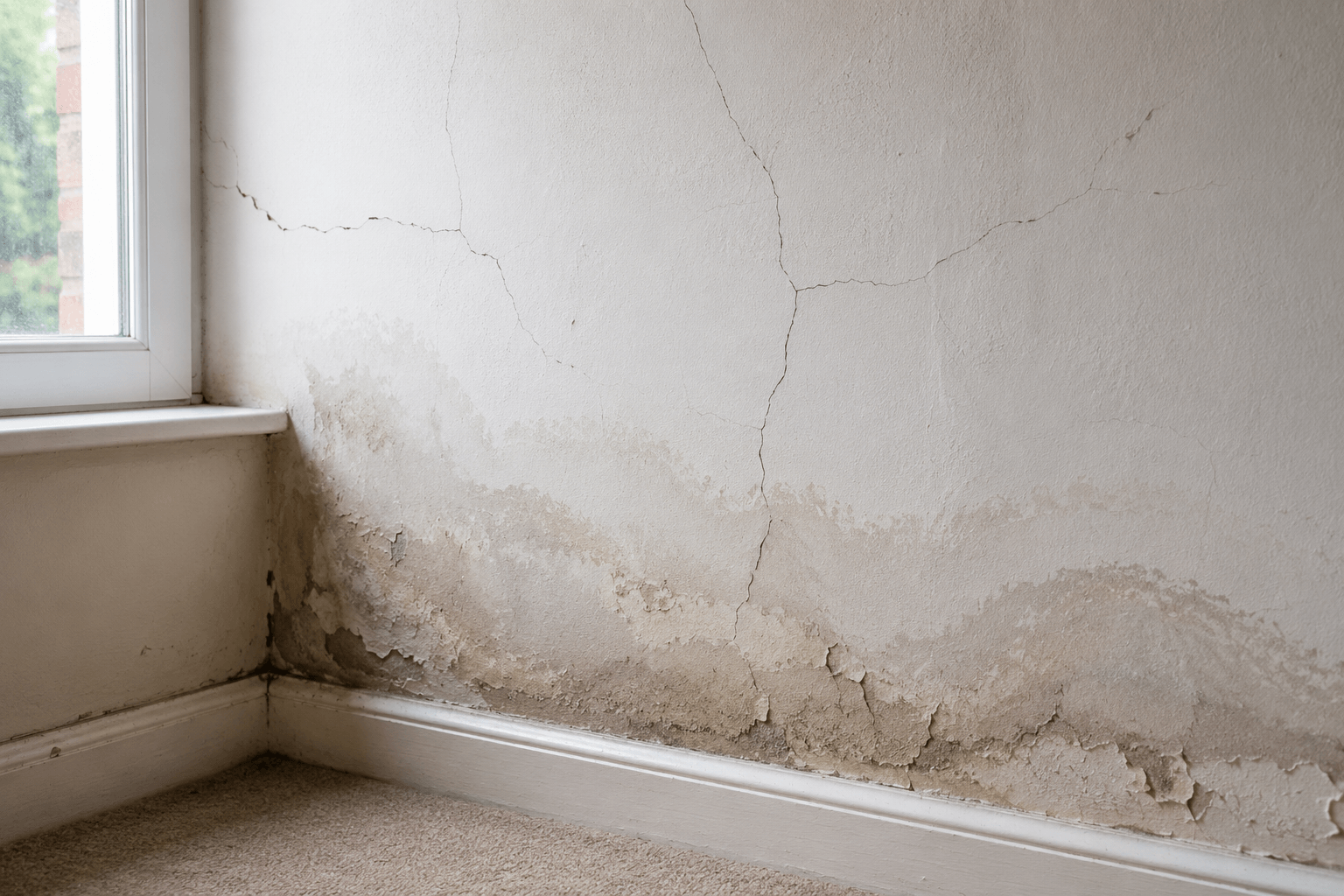
Most homes develop small hairline cracks at some point. Plaster naturally expands and contracts slightly as temperatures change, and buildings settle gradually over the years. In many cases, these cracks remain harmless and purely cosmetic.
Problems become more likely when cracks appear in areas already exposed to condensation or persistent damp conditions. External-facing bedroom walls, chimney breasts and colder corners are all common examples because moisture tends to linger there longer.
Homeowners often begin noticing patterns such as:
- cracks returning after redecorating
- paint lifting around the damaged area
- plaster feeling softer near the crack
- staining developing nearby
The wider pattern usually matters more than the crack itself. Through our team at Home Energy Save GB, moisture-related wall damage is assessed by looking at the condition of the surrounding wall, airflow within the room and whether other damp symptoms are appearing alongside the cracking.
Peeling Paint and Cracked Plaster Often Develop Together
When paint begins flaking away around cracked plaster, trapped moisture is frequently involved somewhere beneath the surface. This type of damage is especially common in rooms where airflow is poor or where condensation repeatedly settles on colder walls.
In many homes, the decorating problem appears first. A freshly painted wall starts bubbling again within months, or wallpaper continues peeling from the same section despite repeated repairs. The crack itself may stay relatively small while the surrounding decorative finish gradually deteriorates.
The table below shows how cosmetic cracking often differs from moisture-related wall damage.
| Cosmetic Cracking | Moisture-Related Damage |
| Fine stable hairline cracks | Cracks appearing alongside damp patches |
| Dry plaster surface | Soft or uneven plaster nearby |
| No decoration failure | Bubbling paint or lifting wallpaper |
| Damage unchanged for years | Worsening deterioration over time |
| Usually isolated | Often appears with other damp symptoms |
This is why repainting rarely solves the issue permanently if moisture remains active within the wall. In properties where damage repeatedly returns, proper damp proofing investigations often help identify the source more effectively than continued cosmetic repairs alone.
Damp Patches Can Gradually Weaken Plaster
Cracks forming directly through damp patches can indicate moisture weakening the plaster beneath the surface. This deterioration usually develops slowly and unevenly, particularly in older homes where walls absorb and release moisture differently across the property.
A chimney breast affected by penetrating damp is a good example. The wall may initially show faint staining during wetter months. Over time, the paint begins bubbling, the plaster softens and fine cracks start appearing through the weakened surface.
The process often develops in stages:
- Moisture enters or becomes trapped within the wall
- Decorative finishes begin reacting to dampness
- Plaster weakens and loses stability
- Cracks appear through the affected areas
- Surface repairs fail because the moisture remains unresolved
Here at Home Energy Save GB, this type of deterioration is regularly investigated alongside ventilation issues, condensation patterns and external defects because damp-related cracking rarely happens in isolation.
Bubbling or Hollow Plaster Usually Suggests Moisture Has Been Present for Some Time
When plaster begins swelling, flaking or sounding hollow when tapped, moisture may already have been affecting the wall internally for quite a while. In older UK properties especially, plaster can gradually lose its bond with the wall beneath after repeated moisture exposure.
Lower hallway walls and ground-floor external walls are common areas where this develops. Homeowners often notice the wall becoming:
- powdery near the skirting
- uneven during decorating
- flaky around cracks
- softer than surrounding surfaces
White salt deposits can also appear where moisture travels through masonry and evaporates at the surface. This is frequently seen in properties affected by long-term dampness at the lower wall level.
Bubbling plaster, in our eyes at Home Energy Save GB, is treated as an important symptom rather than a standalone diagnosis. The priority is understanding why moisture remains trapped within the wall before cosmetic repairs are considered.
Not All Damp-Related Cracks Are Structural
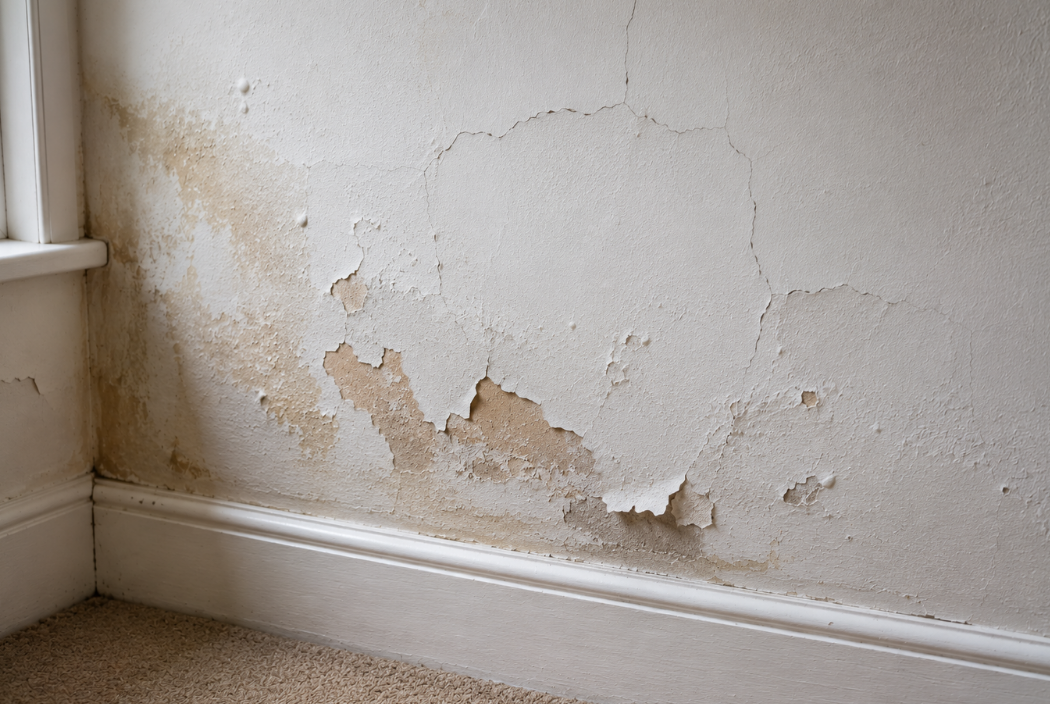
One of the biggest misconceptions homeowners have is assuming cracked plaster automatically means structural movement. In reality, many damp-related cracks affect internal plaster finishes rather than the structure of the property itself.
Most small internal cracks are not dangerous. The concern usually increases when cracking appears alongside wider movement symptoms, such as:
- bulging walls
- stepped brickwork cracks
- rapidly widening gaps
- sticking windows or doors
- visible movement across multiple areas
Balanced assessment matters more than worst-case assumptions. Older homes naturally experience some movement over time, and damp-related plaster deterioration can often look more dramatic than it actually is.
This is why Home Energy Save GB focuses heavily on identifying whether moisture is simply affecting decorative finishes or whether wider property issues may also need investigating.
Lower Wall Damage Often Points Towards Moisture Problems
Cracks appearing near skirting boards or floor level are commonly associated with moisture affecting the lower part of the wall. In older solid-wall properties especially, damp can gradually weaken plaster until surfaces begin crumbling, staining or separating from the masonry beneath.
Homeowners may also notice:
- bubbling paint near skirting boards
- musty smells close to floor level
- damaged timber skirting
- tide marks or staining
- recurring decoration failure
Rising damp is one possible explanation, although not every lower-wall moisture issue is true rising damp. Condensation, bridging issues and penetrating moisture can sometimes create very similar symptoms. Proper diagnosis is therefore essential before deciding what treatment may actually be appropriate.
Condensation Can Slowly Damage Wall Surfaces Over Time
Condensation is one of the most common causes of gradual decorative wall damage in UK homes. Repeated moisture settling on colder surfaces can slowly weaken paint, wallpaper and plaster, particularly around windows and external-facing walls.
The damage often develops slowly enough that homeowners stop noticing the progression until the wall begins visibly deteriorating. What starts as slight condensation around a bedroom window can gradually become peeling paint, mould growth and cracking plaster over several winters.
In many homes, the issue worsens because everyday moisture has nowhere to escape properly. Poor ventilation, blocked air movement and inconsistent heating all contribute to moisture remaining trapped within the room.
At Home Energy Save GB, condensation-related wall deterioration is regularly identified in properties where homeowners originally assumed the cracking was simply due to ageing plaster rather than long-term humidity problems.
When Is It Worth Getting a Damp Survey?
A professional damp survey may be worthwhile when cracks continue worsening alongside other moisture-related symptoms. Repeated decoration failure, soft plaster and spreading damp patches can all indicate the wall needs further investigation.
At Home Energy Save GB, surveys assess more than the visible crack itself. Moisture readings, ventilation conditions, wall construction and surrounding property defects all help build a clearer understanding of why deterioration may be happening.
Professional guidance is often most useful when:
- cracks repeatedly return after repair
- damp patches continue spreading
- plaster feels unstable or hollow
- mould or musty smells appear nearby
- multiple symptoms are worsening together
If cracks in walls are appearing alongside damp patches or peeling plaster, you can contact us to arrange further guidance or a professional damp survey.
Cracks in walls are not always a sign of damp, although moisture can contribute to plaster deterioration and decorative damage over time. The key is looking at the wider pattern rather than focusing on one isolated crack.
Where cracking appears alongside damp patches, peeling paint, bubbling plaster or musty smells, the wall may already be responding to ongoing moisture problems within the property. Understanding the cause early can help prevent repeated cosmetic repairs and further deterioration later.
At Home Energy Save GB, damp investigations focus on the wider property conditions affecting the wall so homeowners can better understand whether the issue appears cosmetic, moisture-related or potentially more serious
