
Orange mould in a house is usually linked to moisture, condensation or poor ventilation. It often appears as orange patches, staining or slime-like growth in areas where surfaces stay damp for long periods, particularly around bathrooms, windows, external walls and hidden corners with restricted airflow.
For many homeowners, the confusion starts because not every orange mark is actually mould. Some discolouration is caused by rust staining, mineral deposits or long-term water exposure, while other patches may point towards active mould growth developing on damp surfaces.
At Home Energy Save GB, moisture-related mould problems are regularly uncovered in homes where condensation has been building quietly for months or even years. In many cases, the visible orange staining is only part of a wider ventilation or damp issue affecting the property.
Orange Mould Often Appears in Colder, Damper Parts of the Home
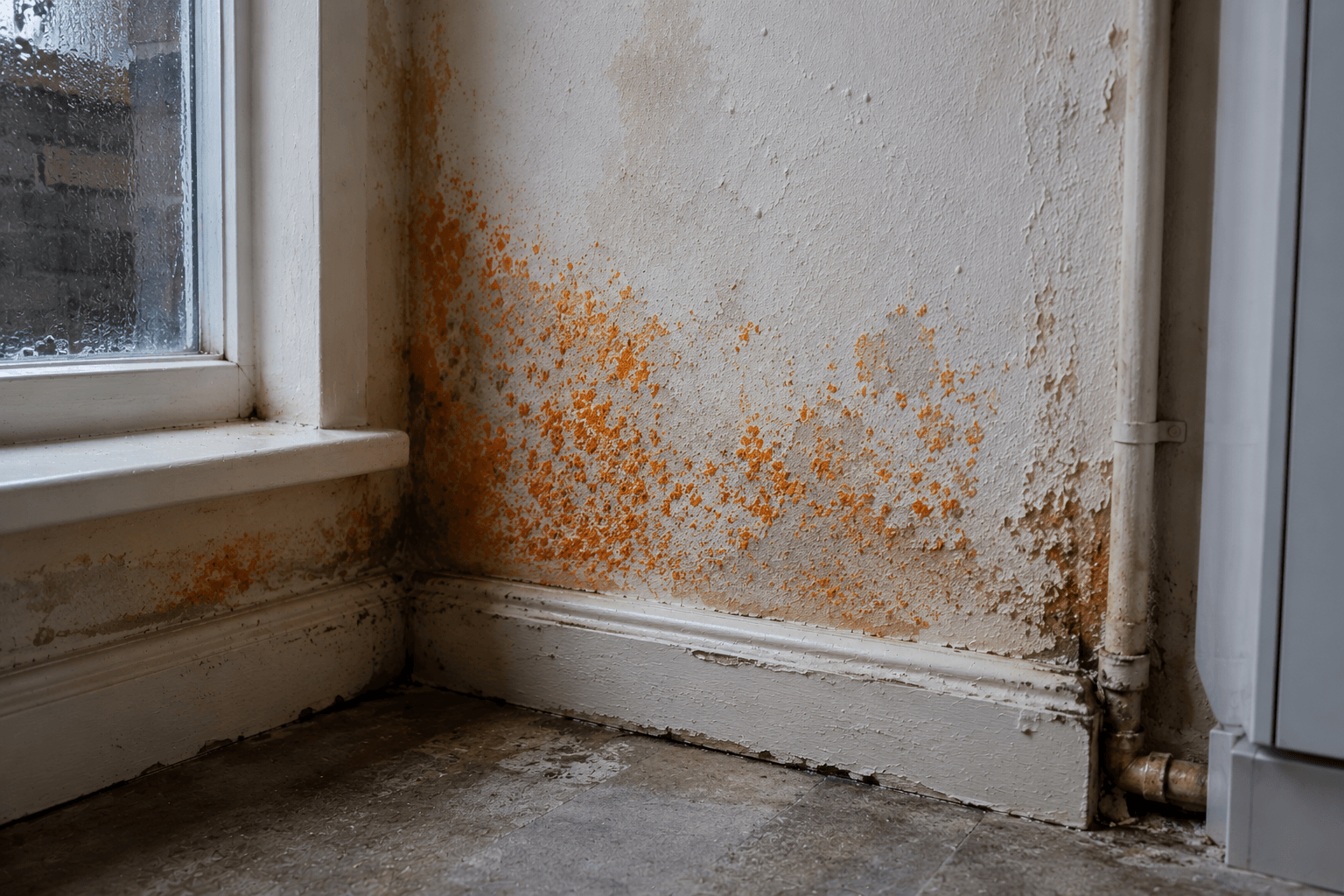
Orange mould usually develops where moisture repeatedly settles and struggles to dry properly. In UK homes, that often means colder rooms, poorly ventilated corners and surfaces exposed to regular condensation.
Bedroom ceiling corners are a common example. During colder weather, warm indoor air meets colder wall and ceiling surfaces, allowing moisture to collect gradually over time. What starts as faint orange discolouration can eventually develop into more obvious mould growth if humidity levels remain high.
The appearance itself can vary quite a bit depending on the surface and moisture conditions. In some homes, the mould looks pale orange and powdery. In others, it appears darker, patchier or closer to rust-coloured staining.
Home Energy Save GB frequently sees this in spare bedrooms, external-facing walls and rooms where furniture blocks airflow from circulating properly. The mould is rarely random. It usually forms in the areas where moisture consistently lingers longest.
In Very Damp Conditions, Orange Growth Can Become Slime-Like
Where moisture levels remain extremely high, orange mould may appear wet, jelly-like or slimy rather than dry and dusty. This is more common in spaces where surfaces rarely dry fully, such as bathrooms, utility rooms, basements or areas affected by hidden leaks.
A slow plumbing leak beneath a kitchen sink, for example, can create enough trapped moisture for orange growth to begin forming around pipework or cabinetry. Similarly, condensation collecting around poorly ventilated bathroom corners can leave damp residue that gradually encourages mould development.
One of the reasons homeowners become concerned is that orange slime can sometimes look more alarming than darker mould growth. In reality, the important factor is usually the moisture conditions behind it rather than the colour alone.
At Home Energy Save GB, inspections often reveal that persistent humidity and restricted airflow are contributing far more to recurring mould problems than homeowners initially realise.
Windows and Seals Are One of the Most Common Problem Areas
Window frames and seals are particularly vulnerable because condensation collects there so regularly during colder months. Moisture pooling on glass gradually transfers onto surrounding surfaces, especially where ventilation is limited overnight.
This is why many homeowners first notice orange mould:
- around bedroom window corners
- on silicone seals
- along window sills
- beneath curtains or blinds
- near black spot condensation mould
Simply wiping condensation away each morning may improve the appearance temporarily, although the underlying humidity problem inside the room often remains unchanged.
At Home Energy Save GB, recurring mould around windows is regularly linked to wider condensation and airflow issues elsewhere in the property. In some homes, improving ventilation and reducing indoor humidity makes a far bigger difference than repeated cleaning alone.
Bathroom Surfaces Can Develop Orange Mould Surprisingly Quickly
Bathrooms create the perfect environment for moisture build-up. Steam from showers and baths settles onto grout, sealant and painted surfaces, especially where extractor fans are weak or ventilation is inconsistent.
Over time, homeowners may notice:
- orange staining in grout lines
- discoloured sealant around baths
- mould forming near shower corners
- damp patches on ceilings
- lingering condensation after washing
Soap residue and trapped moisture often combine to create surfaces where mould develops more easily. The problem is particularly common in bathrooms where windows stay closed or extractor fans are rarely used long enough after showering.
Home Energy Save GB regularly investigates bathroom mould issues where the visible staining turned out to be part of a broader condensation problem affecting multiple rooms throughout the home.
Not Every Orange Mark Is Actually Mould
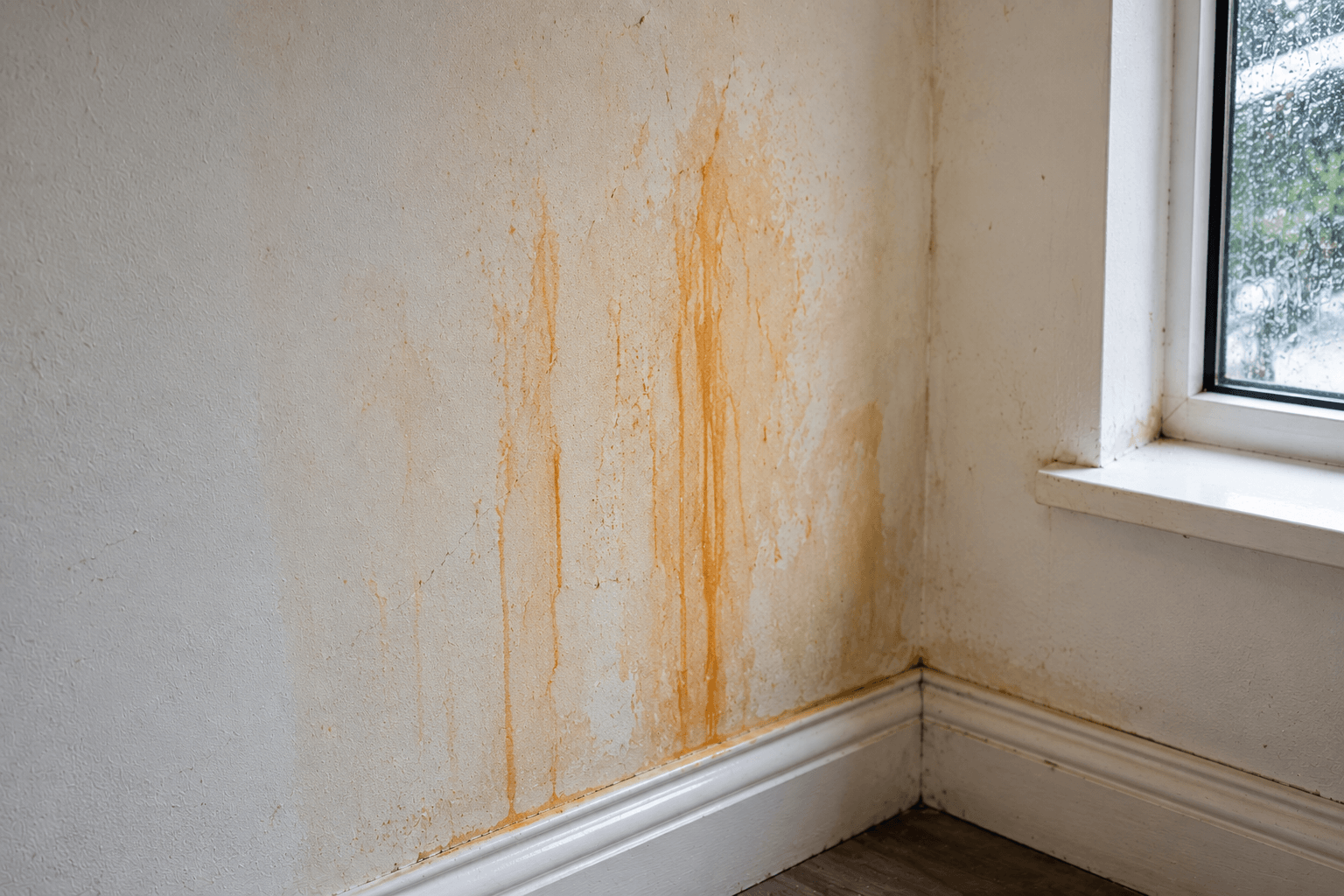
One of the most useful things homeowners can understand is that orange discolouration does not automatically mean mould growth. Water staining, rust deposits and mineral build-up can sometimes create very similar marks on walls and ceilings.
The difference usually becomes clearer when looking at the wider moisture conditions surrounding the area.
| Possible Sign | What It May Suggest |
| Dry orange staining near pipework | Mineral or rust deposits |
| Slimy or spreading patches | Active moisture-related growth |
| Marks appearing with condensation | Humidity-related mould risk |
| Repeated staining after cleaning | Ongoing moisture exposure |
| Damp smells nearby | Hidden moisture retention |
At Home Energy Save GB, this wider property context is an important part of diagnosing mould problems properly. Treating visible staining without understanding why moisture is building up often leads to the same issue returning repeatedly.
Mould Often Develops Behind Furniture Before Homeowners Notice It
One of the most common places orange mould develops is behind furniture placed against colder external walls. Wardrobes, beds and storage units can restrict airflow enough to trap cool, damp air in small hidden pockets.
In many homes, the mould remains unnoticed for long periods because the affected area is rarely inspected closely. Homeowners may only discover the problem after moving furniture and finding staining, damp smells or mould patches behind it.
This is especially common in:
- spare bedrooms
- unused corners
- boxed-in storage areas
- external wall alcoves
- rooms heated inconsistently during winter
At Home Energy Save GB, hidden mould growth is frequently linked to a combination of condensation, restricted airflow and cold bridging around external walls. Leaving small airflow gaps behind furniture can sometimes help reduce moisture build-up in these areas.
Poor Ventilation Is Usually the Bigger Problem
Orange mould is often less about the mould itself and more about the conditions allowing moisture to remain trapped indoors.
Everyday activities constantly release humidity into the air. Cooking, showering, drying clothes indoors, and even breathing all contribute moisture within the property. Without proper airflow, that humidity settles onto colder surfaces throughout the home.
The pattern usually develops gradually:
- Indoor humidity rises
- Moisture settles onto colder surfaces
- Damp patches or condensation begin appearing
- Surfaces remain wet for longer periods
- Mould growth gradually develops
This is why recurring mould often returns even after repeated cleaning. Unless the ventilation, airflow or moisture source improves, the conditions encouraging mould growth still remain.
Where mould problems keep returning despite regular cleaning, Home Energy Save GB can help assess whether hidden condensation, poor airflow or wider damp proofing concerns may be contributing to the issue.
Musty Smells Can Appear Before Visible Mould
A persistent musty smell is often one of the earliest signs that excess moisture is building up somewhere within the property. In some homes, odours become noticeable long before mould patches fully appear on visible surfaces.
This usually happens because moisture becomes trapped:
- behind wallpaper
- beneath flooring
- inside cupboards
- around stored belongings
- within poorly ventilated corners
Homeowners sometimes clean visible mould successfully, only for the smell to keep returning because hidden moisture remains elsewhere in the room.
At Home Energy Save GB, musty odours are often treated as an early warning sign that condensation or damp conditions may already be affecting hidden parts of the property.
When Could Orange Mould Suggest a Wider Damp Problem?
Small isolated patches do not always mean there is a major damp issue. However, recurring mould growth across multiple rooms can suggest the home is struggling with excess moisture more broadly.
The signs become more concerning when mould appears alongside:
- daily condensation on windows
- damp smells
- peeling paint or wallpaper
- cold external walls
- repeated mould returning after cleaning
- staining spreading into new areas
In many homes, the problem develops slowly enough that homeowners adapt to the conditions without realising how much moisture is building up indoors over time.
If mould keeps returning despite cleaning and ventilation changes, it may be worth investigating whether hidden damp or condensation problems are contributing to the issue. You can contact us to arrange further guidance or a professional damp survey.
Orange mould in a house is usually connected to moisture, condensation and poor ventilation rather than one isolated issue. While some orange staining may simply be mineral deposits or water marks, recurring growth often points towards surfaces staying damp for too long.
The most useful approach is understanding why moisture is building up in the first place. Bathrooms, windows, hidden corners and rooms with limited airflow are often the first places where mould begins appearing, particularly during colder months.
At Home Energy Save GB, mould investigations focus on the wider property conditions contributing to recurring moisture problems, so homeowners can better understand whether the issue is isolated, condensation-related or linked to a broader damp concern.
