
Many homeowners clean black mould in the bathroom only to find it returns a few weeks later. Bathrooms are naturally prone to mould because daily showers and baths create warm, humid conditions where moisture can linger on walls, ceilings and windows.
While cleaning visible mould is important, it rarely solves the underlying problem on its own. At Home Energy Save GB, we often see homeowners treating the visible mould while the underlying moisture issue remains unresolved. Understanding what is causing the excess moisture, whether condensation, poor ventilation or a damp issue, is the key to preventing mould from coming back.
Improve Ventilation After Showers and Baths
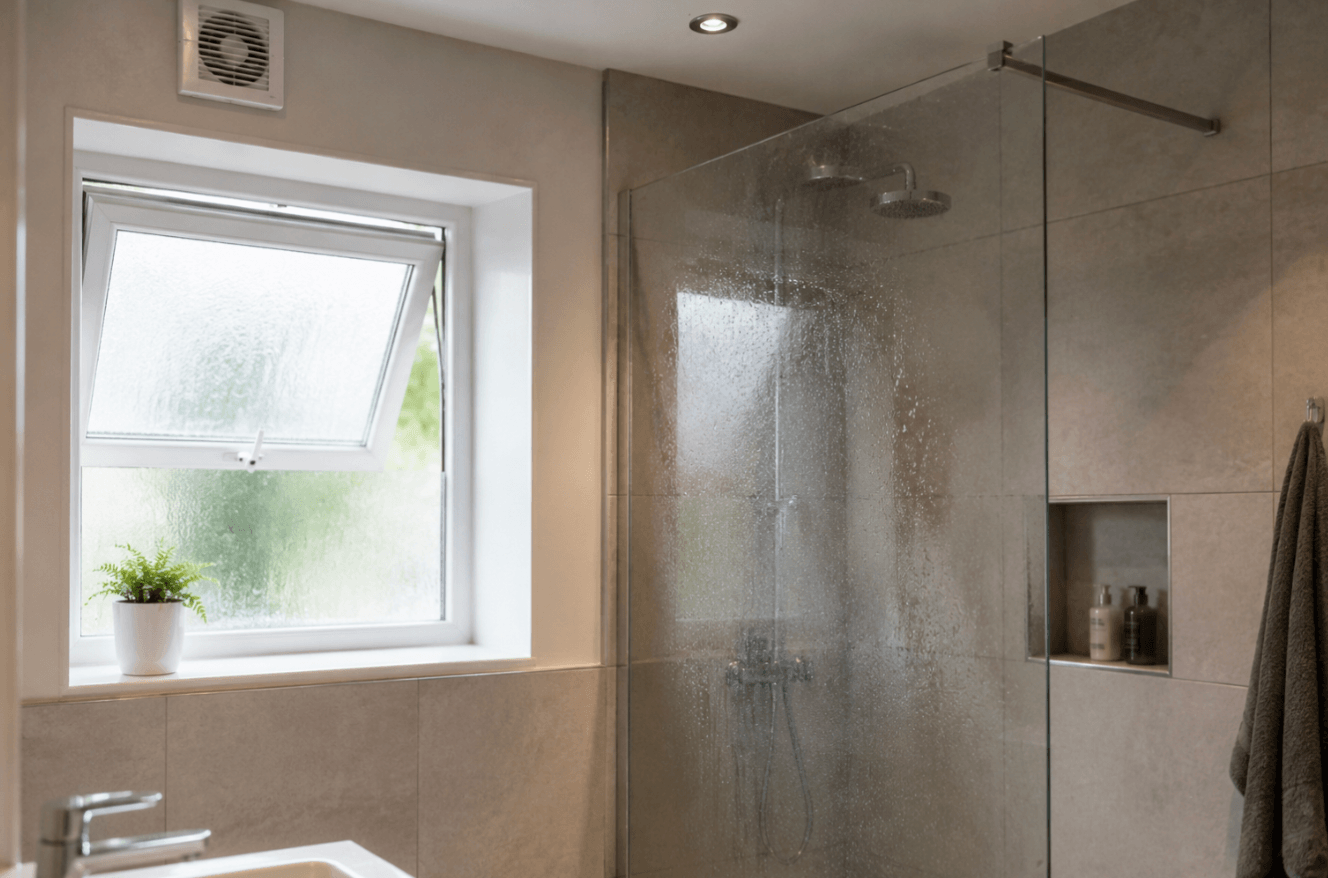
Bathroom mould often develops because moisture stays trapped in the room after washing. Improving airflow helps surfaces dry faster and reduces condensation.
Warm, humid air from showers can settle on walls and ceilings if it has nowhere to escape. Over time, this creates conditions where mould can grow.
To improve ventilation:
- Leave the extractor fan running after showering
- Open a window where possible
- Allow steam time to escape
- Avoid trapping moisture in the room
Consistent airflow helps reduce the damp conditions that encourage mould growth.
Open Windows to Reduce Moisture Build-Up
Opening a bathroom window after bathing helps humid air escape before it settles onto walls, ceilings and tiles.
Many homeowners keep windows closed during winter, which can allow condensation to build up more quickly.
Try to:
- Open the window for 15–20 minutes after showering
- Allow steam to clear before closing it
- Create cross ventilation where possible
- Ventilate consistently throughout the year
Regular window ventilation helps reduce moisture build-up and makes bathrooms less suitable for mould growth.
Use an Extractor Fan Properly
Extractor fans only help reduce mould if they remove moisture effectively and are used for long enough after bathing.
Common checks include:
- Run the fan during and after showers
- Leave it on for several minutes afterwards
- Clean vents regularly
- Check airflow is not restricted
- Consider humidity-sensor fans
Many homeowners switch fans off too soon, leaving moisture trapped in the room. Ineffective extraction is one of the most common reasons bathroom mould keeps returning despite regular cleaning.
In properties with wider airflow issues, solutions such as Positive Input Ventilation (PIV) units can help improve whole-home ventilation and reduce trapped moisture.
Remove Condensation From Walls and Tiles
Condensation left sitting on bathroom surfaces gives mould the moisture it needs to grow.
Reducing surface moisture can make a noticeable difference, particularly in smaller bathrooms where humidity levels rise quickly.
Focus on:
- Wiping down shower screens
- Drying window sills
- Removing moisture from tiled walls
- Checking silicone seals around baths and showers
- Drying surfaces where water regularly collects
This simple habit reduces the amount of moisture available for mould growth between uses.
Clean Black Mould Before It Spreads
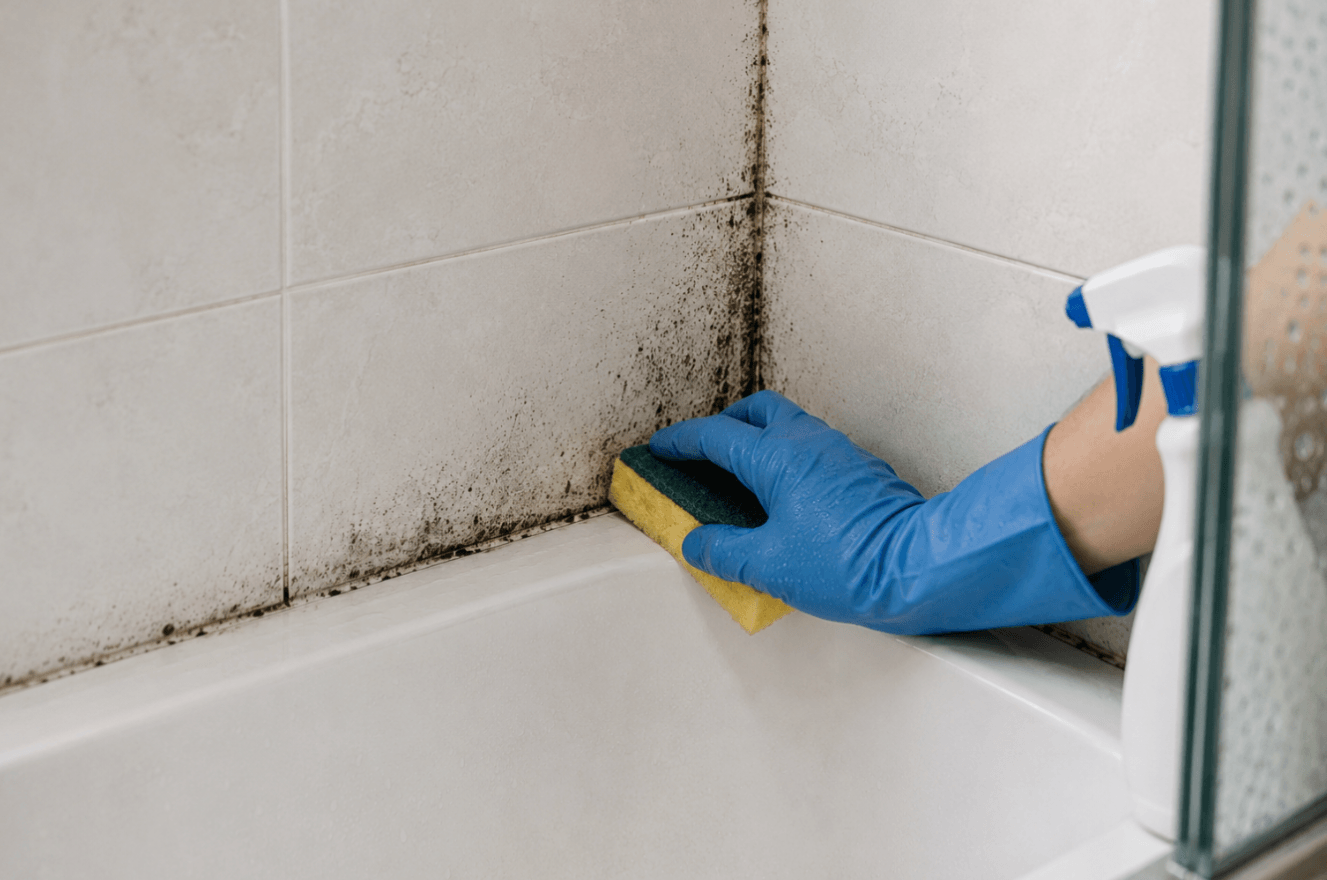
Small areas of bathroom mould should be cleaned promptly before spores spread further across damp surfaces.
When cleaning mould:
- Wear protective gloves
- Keep the room well ventilated
- Follow product instructions carefully
- Avoid dry brushing affected areas
- Dispose of cleaning materials safely
Cleaning removes visible mould. It does not address the moisture source behind it. If mould repeatedly returns to the same area, condensation, poor ventilation or another moisture issue may still be present and require further investigation. If mould is appearing beyond the bathroom, it can help to understand other common places mould appears in the home.
Keep Bathroom Surfaces Dry Where Possible
Reducing how long moisture sits on surfaces can make bathrooms less suitable for mould growth.
Small daily habits make a bigger difference than homeowners expect.
Use this checklist:
- Hang towels so they dry properly
- Remove wet bath mats when possible
- Dry shower trays after use
- Pay attention to corners and grout lines
- Prevent standing water from accumulating
The goal is not to create a completely dry bathroom immediately after use, but to reduce prolonged dampness.
Reduce Moisture Around Windows and Ceilings
Bathroom mould commonly appears around colder surfaces where condensation forms most heavily.
This is why mould frequently develops:
- Around bathroom windows
- In ceiling corners
- Along external walls
- Behind furniture or storage units
Cold surfaces cool the humid air around them, causing moisture to form as condensation.
In some properties, poor insulation or cold bridging can make certain areas consistently colder than the surrounding room. These locations become recurring mould hotspots.
The pattern of mould growth can provide useful clues about the underlying cause.
Avoid Drying Towels and Clothes in the Bathroom
Drying fabrics indoors can add significant moisture to an already humid bathroom.
A bathroom that regularly receives moisture from showers, wet towels and drying clothes has little opportunity to dry out properly.
This is especially common during winter when outdoor drying is less practical.
Where possible:
- Dry clothes in a well-ventilated area
- Avoid overcrowding radiators with wet fabrics
- Reduce additional moisture sources in small bathrooms
Less moisture in the room means less condensation and fewer opportunities for mould growth.
Check for Leaks Around Baths, Toilets and Sinks
Not all bathroom mould is caused by steam. Hidden leaks can create persistent damp patches that encourage mould growth.
Look for signs such as:
- Cracked or damaged silicone seals
- Water staining
- Damp patches that remain during dry weather
- Loose pipe connections
- Peeling paint in isolated areas
Condensation usually affects wider surface areas. A leak creates a more concentrated pattern of dampness.
Identifying this distinction can help avoid treating the wrong problem.
Why Black Mould Often Returns Without Treating the Cause
Bathroom mould usually returns when the underlying moisture problem has not been resolved.
This is one of the most common issues Home Energy Save GB identifies during mould and damp inspections, recurring treatment of symptoms rather than the moisture source itself.
Many homeowners remove visible mould but leave the conditions that allowed it to grow in the first place. As a result, the mould reappears.
| Myth | Reality |
| Cleaning mould solves the problem | Cleaning removes the symptom, not the cause |
| Mould only appears in dirty bathrooms | Excess moisture is usually the main cause |
| All mould is caused by condensation | Leaks and damp issues can also contribute |
Recurring mould is a strong sign that moisture levels remain too high, often due to unresolved condensation problems, poor ventilation or hidden damp.
If you are unsure whether the issue is moisture-related or structural, understanding the difference between damp and condensation can help.
How Damp Problems Can Lead to Ongoing Bathroom Mould
Persistent mould can sometimes indicate a deeper damp issue within walls, ceilings or surrounding areas.
While condensation is the most common cause of bathroom mould, other factors can contribute. These include penetrating damp, hidden leaks, poor insulation and cold bridging around windows or external walls.
These problems create cold or damp surfaces where mould can continue to develop.
Because different moisture issues can look similar, accurate diagnosis matters. Home Energy Save GB investigates mould patterns, wall temperatures, airflow and moisture behaviour to determine whether condensation alone is responsible or whether a deeper damp issue is contributing. Treating mould alone may not prevent it from returning if an underlying damp problem remains unresolved.
When to Contact a Damp and Mould Specialist
If bathroom mould keeps returning despite improving ventilation and cleaning routines, a professional damp inspection may help identify the root cause.
Consider seeking specialist advice if you notice:
- Mould returning soon after cleaning
- Persistent musty smells
- Damp patches spreading beyond the bathroom
- Peeling paint or plaster
- Condensation problems throughout the home
- Signs of leaks or hidden moisture
A professional damp survey can help determine whether condensation, ventilation issues or damp problems are contributing to recurring mould.
If black mould keeps returning despite your best efforts, Home Energy Save GB can carry out a detailed mould assessment to identify the underlying cause and
recommend practical next steps, whether that involves improved ventilation, moisture control or professional mould treatment.
To discuss persistent mould issues in your property, speak to our team.
