
Many homeowners dealing with damp patches, condensation or mould wonder whether a dehumidifier will solve the problem. While these appliances can reduce moisture in the air and make rooms feel drier, they are not designed to fix every type of damp issue.
The key is understanding where the moisture is coming from. In this guide, Home Energy Save GB explains what dehumidifiers can help with, where their limitations lie and when professional investigation may be the more appropriate next step.
How Dehumidifiers Work Inside a Home
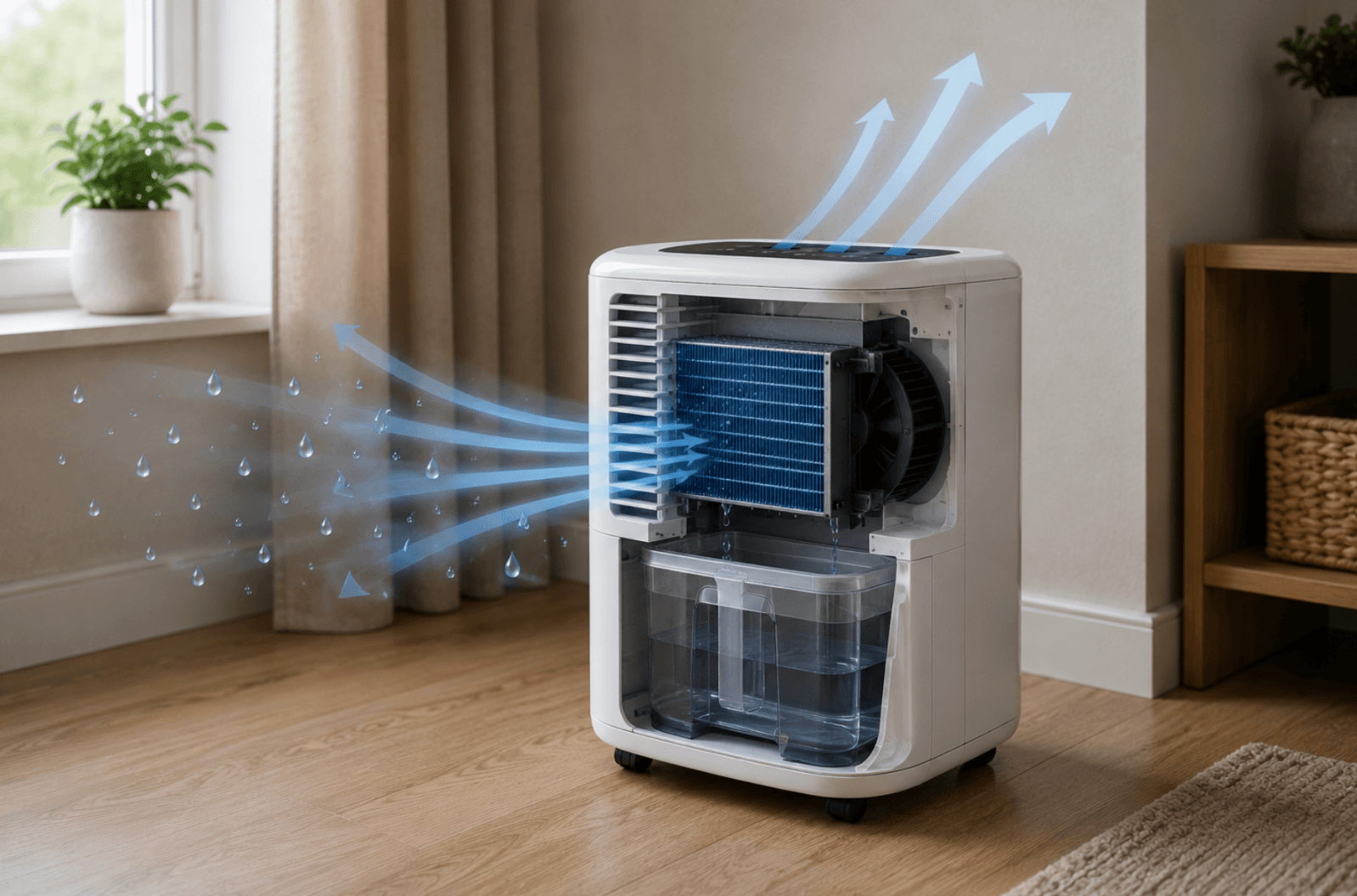
Dehumidifiers work by removing excess moisture from the air, helping reduce humidity levels inside a property.
The unit draws humid air through an internal system that extracts water vapour before releasing drier air back into the room. The collected water is stored in a tank or drained away through a hose, depending on the model.
This process can help improve indoor comfort by lowering humidity levels and reducing moisture build-up on cold surfaces.
Common benefits include:
- Less condensation on windows
- Reduced humidity in bedrooms and living spaces
- Faster drying of laundry indoors
- Improved comfort during colder months
- Better moisture control in poorly ventilated rooms
These benefits are useful where excess airborne moisture is the primary issue.
A dehumidifier manages moisture in the air. It does not repair building defects or stop water entering the structure.
Why Dehumidifiers Only Remove Moisture From the Air
A dehumidifier can reduce moisture levels in the air, but it cannot repair leaks, damaged walls or failed damp proofing systems.
Many damp problems originate from a physical source of water. The appliance may remove moisture from the surrounding environment while the original cause continues affecting the building.
The distinction is important.
| Problem | What a Dehumidifier Can Help With | What It Cannot Do |
| Condensation | Lower humidity levels | Improve ventilation by itself |
| Indoor moisture build-up | Reduce airborne moisture | Remove the source producing excess moisture |
| Rising damp | Dry surrounding air | Stop moisture travelling through masonry |
| Penetrating damp | Reduce humidity nearby | Repair external defects |
| Plumbing leaks | Assist drying after repairs | Fix leaking pipework |
This explains why some properties appear to improve temporarily before damp symptoms reappear weeks or months later.
The moisture source remains active even though the room feels drier.
The Difference Between Damp and Condensation
Condensation forms from excess humidity inside the home, while damp usually results from moisture entering the building structure itself.
Many homeowners confuse the two because both can lead to staining, mould growth and damp-looking surfaces. The cause is what separates them.
| Condensation | Structural Damp |
| Caused by moisture in the air | Caused by water entering building materials |
| Forms on cold surfaces | Develops within walls, floors or ceilings |
| Linked to humidity and ventilation | Linked to moisture ingress or movement |
| Common around windows and corners | Common on plaster and masonry |
Condensation is usually associated with everyday activities such as cooking, showering and drying clothes indoors. Structural damp points to an underlying issue within the property that requires investigation and targeted treatment. If you are unsure which problem you are dealing with, our guide on understanding the difference can help you identify the likely cause.
Why Rising Damp Cannot Be Fixed With a Dehumidifier
Rising damp occurs when moisture travels upward through masonry, which means removing airborne humidity alone will not stop the problem.
Moisture from the ground can move through bricks and mortar when a damp proof course has failed, deteriorated or become bridged. As water rises through the wall, it can carry salts that damage plaster and decorative finishes.
Common signs include:
- Tide marks near floor level
- Crumbling plaster
- Salt deposits on walls
- Peeling wallpaper
A dehumidifier may make the room feel drier by reducing humidity levels. The moisture within the wall remains present and continues moving through the structure.
Long-term resolution requires the source of the moisture to be identified and treated appropriately.
Penetrating Damp and the Limits of Dehumidifiers
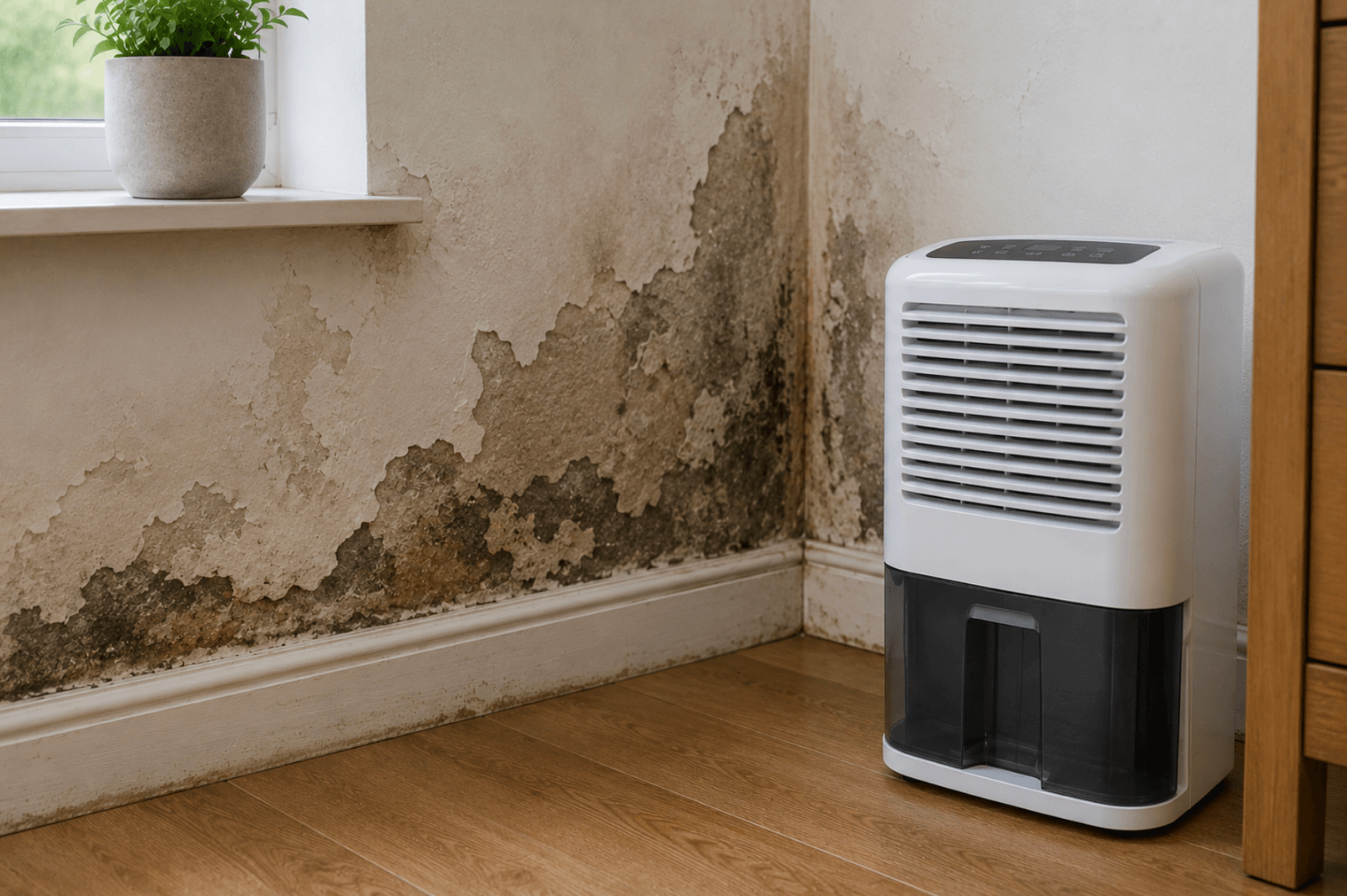
Penetrating damp is caused by water entering the property through defects such as damaged brickwork, roofing or guttering.
Unlike rising damp, penetrating damp can appear at any height within a property.
Common causes include:
- Cracked render
- Defective pointing
- Damaged roof coverings
- Blocked gutters
- Faulty downpipes
- Defective seals around windows and doors
Water enters through the defect and becomes trapped within building materials. Internal surfaces may begin showing staining, damp patches or decoration damage.
A dehumidifier may help dry the surrounding air.
The moisture source remains active until repairs are completed.
Every period of rainfall can introduce additional water into the structure, allowing symptoms to return.
Why Damp Patches Often Return After Using a Dehumidifier
Damp patches on a wall often return because the original source of moisture has not been repaired.
Many homeowners notice a wall drying out after running a dehumidifier for several days or weeks. The improvement can make it seem as though the problem has been resolved. In reality, the appliance may only be reducing visible symptoms.
At Home Energy Save GB, we often see homeowners assume a drying wall means the damp problem has gone away, when the underlying moisture source is still active behind the surface.
If moisture continues entering the property through a defect, the wall can become damp again once humidity levels rise or the dehumidifier is switched off.
Recurring damp problems in homes are commonly linked to:
- Hidden leaks
- Defective guttering
- External wall defects
- Rising damp
- Ongoing condensation issues
Understanding the root cause is essential if the problem keeps returning.
Hidden Damp Problems That a Dehumidifier Cannot Reach
Some damp problems develop inside walls, beneath flooring or within roof spaces where a dehumidifier has little direct effect.
Visible symptoms do not always reveal the full extent of moisture within a property.
Examples include:
- Moisture trapped within cavity walls
- Subfloor dampness beneath suspended timber floors
- Roof leaks affecting insulation and timbers
- Hidden plumbing defects
- Concealed mould growth behind furniture or wall finishes
- Timber decay within poorly ventilated voids
A room may feel noticeably drier while concealed moisture remains trapped within building materials.
This is why accurate diagnosis matters. Home Energy Save GB assesses moisture readings, property construction and external defects to identify hidden damp issues that are not obvious from surface symptoms alone.
Homeowners concerned about persistent moisture can benefit from learning more about diagnosing damp before deciding on treatment options.
Can a Dehumidifier Help With Black Mould?
A dehumidifier may help reduce the conditions that allow black mould to grow, particularly where condensation is the main issue.
By lowering humidity levels, it can reduce the amount of moisture settling on cold surfaces where mould is more likely to develop. This can help limit recurrence in some properties.
However, a dehumidifier does not remove the source of moisture. If mould is linked to leaks, penetrating damp or rising damp, the underlying issue will remain.
For lasting results, moisture sources should be identified and addressed alongside any humidity-control measures. Homeowners experiencing persistent moisture build-up may benefit from seeking help with condensation. In some properties, improved ventilation through PIV units may form part of a broader moisture-management strategy following professional assessment.
Why Damp Proofing Treats the Root Cause
At Home Energy Save GB, professional damp proofing begins with diagnosis. The focus is on identifying and resolving the source of moisture rather than simply managing visible symptoms.
This is the key difference between moisture control and structural treatment.
A professional inspection investigates:
- Internal symptoms
- External defects
- Moisture readings
- Ground levels
- Ventilation conditions
- Building construction
- Potential sources of water ingress
Recommendations are then based on the findings rather than assumptions.
Depending on the cause, solutions may involve repairs, moisture control measures, ventilation improvements or specialist damp proofing solutions.
The objective is always the same: identify the source and prevent moisture from continuing to affect the property.
Signs Your Home May Need Professional Damp Treatment
Persistent moisture issues, recurring mould or worsening wall damage may indicate the need for professional damp assessment.
Consider arranging a professional damp survey if you notice:
- Damp patches returning repeatedly
- Peeling paint or wallpaper
- Musty odours
- Tide marks on internal walls
- Crumbling plaster
- Recurring mould growth
- Cold, persistently damp wall surfaces
- Signs of moisture after rainfall
These symptoms do not automatically mean major repairs are required.
They do indicate that further investigation may be worthwhile to establish the true cause.
Understanding the benefits of a damp survey can help homeowners make informed decisions before problems become more difficult to diagnose.
So, do dehumidifiers work on damp?
They can help manage airborne moisture and reduce condensation-related symptoms. They cannot repair structural defects, stop rising damp or prevent water entering a building through damaged materials.
The most effective solution depends on identifying where the moisture is coming from. If damp patches keep returning, mould continues reappearing or moisture-related symptoms are becoming more noticeable, the next step is understanding the cause rather than focusing solely on the symptoms.
Home Energy Save GB can help identify the source of persistent moisture issues and recommend appropriate action. If you are concerned about recurring damp problems, explore our contact us page to speak to a damp specialist and arrange professional advice.
