
It’s almost invisible at first, yet wood rot can end up costing homeowners thousands. So, whether you’re living in a draughty Victorian terrace or a cottage with creaky beams, it’s more or less worth knowing the early signs—before damp timber turns into a bigger problem.
That said, not all wood rot is the same. In fact, there are three key types that tend to show up in UK homes: dry rot, wet rot, and soft rot. Each behaves a bit differently, spreads in its own way and needs slightly different treatment.
So, let’s take a look at what sets them apart, where you’re likely to find them, and how to spot them early enough to stop damage in its tracks.
Dry Rot (Serpula lacrymans)
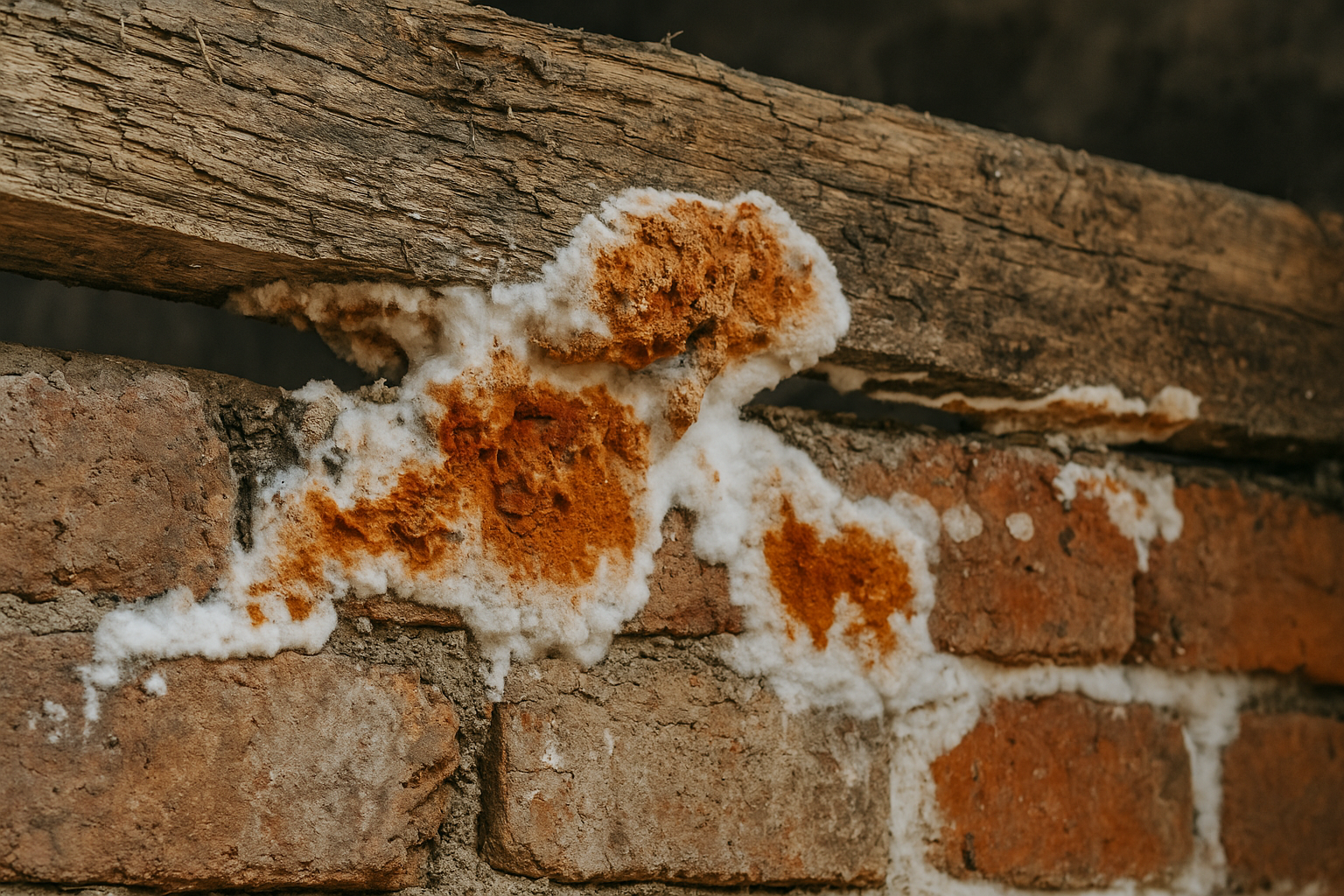
Dry rot might be the most misleading name in this list. Despite the term, this fungus still needs moisture to get started—it just doesn’t need very much. Once it takes hold, it spreads quickly and can cause the most serious structural damage to timber.
What causes dry rot?
It’s usually down to poor ventilation, leaking pipes or roof issues that let in just enough moisture to kick off fungal growth. Dry rot spores are always floating around, so they just need the right conditions to grow: a damp patch, stale air, and a food source—your woodwork.
Where does it tend to appear?
More often than not, dry rot hides in less visible places:
- Under floorboards
- Behind skirting boards
- Inside wall cavities
- Around window or door frames
Anywhere moisture can creep in unnoticed, dry rot can start to thrive.
Key signs to watch for:
- A musty, mushroomy smell (kind of like old socks)
- Cracked, brittle timber that crumbles to the touch
- Cotton wool-like growth on surfaces
- A fruiting body (a flat, orange-brown mushroom with white edges)
- Rust-red spore dust left on nearby surfaces
It tends to look worse than it smells—but honestly, both are bad news. If you’re noticing any of this, it’s more or less time to act. Dry rot can jump from timber to brickwork, which makes it a far bigger issue than just replacing a skirting board.
For specialist help, have a look at our timber treatment service—it’s aimed at stopping dry rot before it spreads further.
Wet Rot (Coniophora puteana and others)
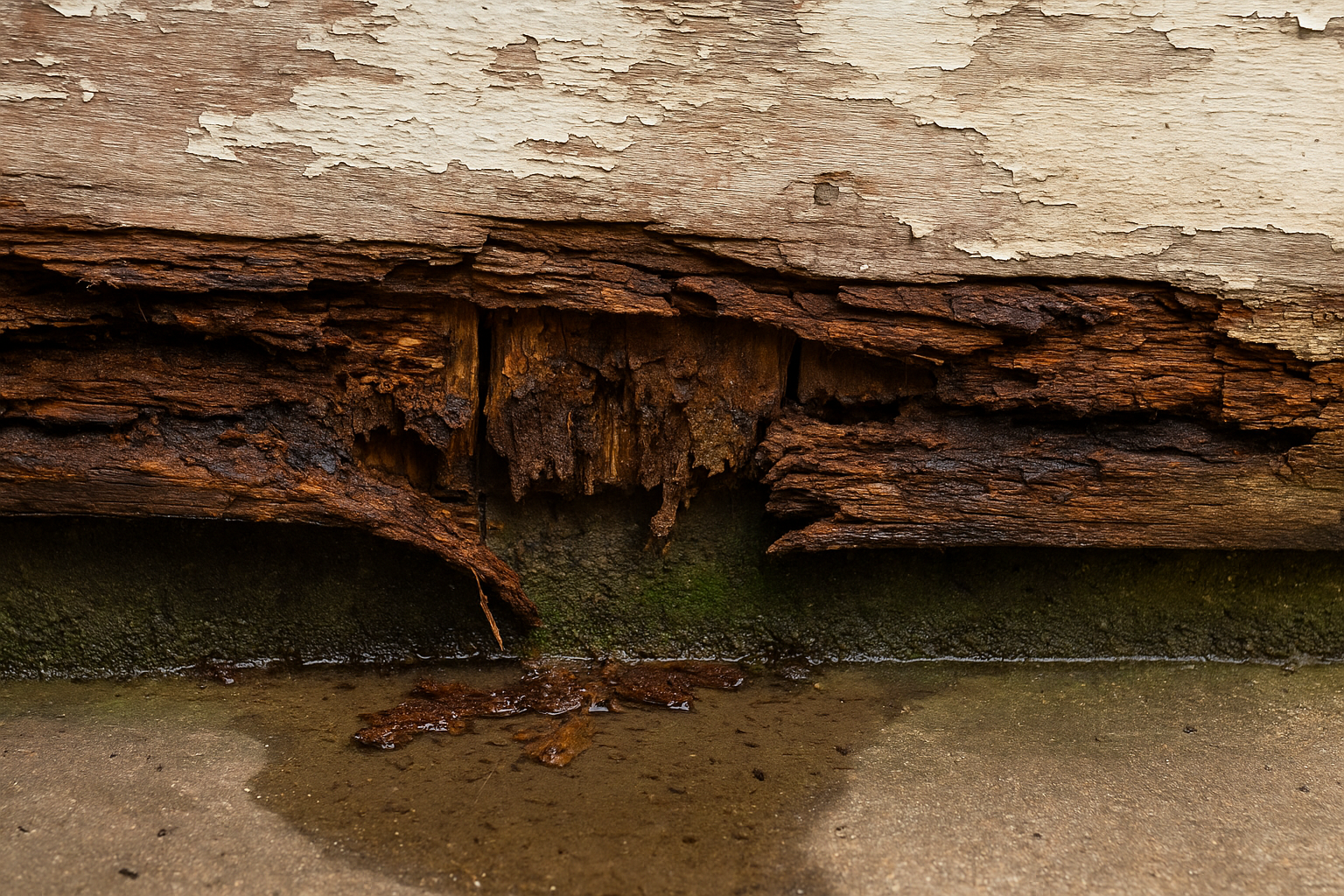
Wet rot tends to stay local—a consistent source of moisture causes it, but it doesn’t usually spread through the entire house like dry rot does. That said, it still weakens wood, damages surfaces and leads to expensive repairs if it’s left unchecked.
Where does wet rot usually show up?
You’ll often find it in:
- Basement timbers
- Leaky windowsills
- Timber in direct contact with damp masonry
- Roof areas with slipped tiles
- Around bathrooms and kitchens
What causes wet rot?
Usually, it’s a persistent moisture problem—like rising damp, faulty plumbing, or just poor ventilation in damp rooms. If the wood stays wet, even slightly, wet rot will usually follow.
How can you tell it’s wet rot?
- Wood feels spongy or soft, and darker than normal
- Paint or varnish appears bubbled or cracked
- Timber may warp or shrink unevenly
- Surface might flake off when touched
- It doesn’t smell as strong as dry rot, but the decay is visible
Dry rot vs wet rot – what’s the difference?
| Feature | Dry Rot | Wet Rot |
| Spread | Fast and wide | Localised |
| Moisture need | Low (once started) | High (constant damp) |
| Smell | Strong and musty | Mild or none |
| Texture | Brittle, breaks apart | Spongy, darker |
| Risk level | High | Moderate |
In short, wet rot is often easier to contain, but still needs fixing promptly—especially to avoid long-term timber weakness.
Soft Rot
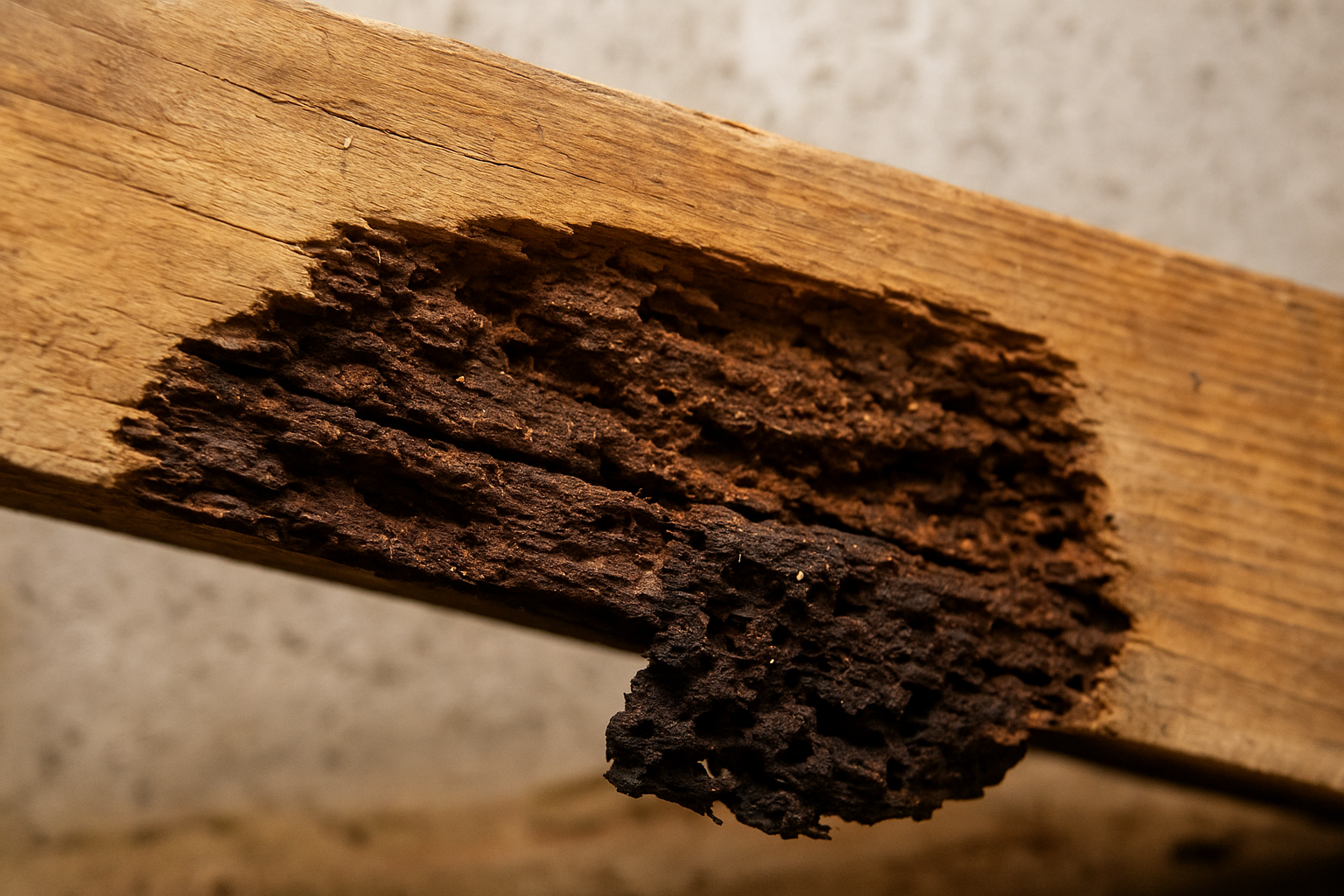
Soft rot isn’t as well-known, mainly because it’s less common indoors and develops more slowly. That said, it tends to affect external woodwork or areas that stay damp for long stretches of time.
Think garden fences, timber cladding, or shed supports—it’s that wood left outside through five winters in a row that ends up soft and splintery.
Where is soft rot usually found?
- Outdoor timber fences
- Wooden window frames in shaded areas
- External sills and soffits
- Timber touching soil or water directly
- Untreated decking
What causes it?
Soft rot happens when wood stays moist over long periods, usually in cooler temperatures. Fungi slowly eat away at the cellulose in wood fibres, which leaves it mushy and discoloured.
Typical signs:
- Greyish-green or soft brown patches on timber
- A texture that feels spongy or crumbly
- Wood that’s clearly softer than it should be
- May be more obvious in colder months when wood is saturated
Prevention tips:
- Keep external timber sealed, painted or treated
- Avoid direct contact between wood and soil or standing water
- Clear gutters and downpipes regularly to avoid run-off
- Use pressure-treated wood for outdoor fixtures
Wood Rot at a Glance
| Rot Type | Where It’s Found | Spread Speed | Typical Signs | Damage Risk |
| Dry Rot | Under floors, inside walls | Very fast | Musty smell, brittle wood, mushroom-like growth | Very high |
| Wet Rot | Leaky or damp areas | Moderate | Soft wood, peeling paint, discolouration | Moderate |
| Soft Rot | Outdoors, damp timber | Slow | Spongy texture, grey/brown patches | Low to moderate |
How to Spot Wood Rot at Home
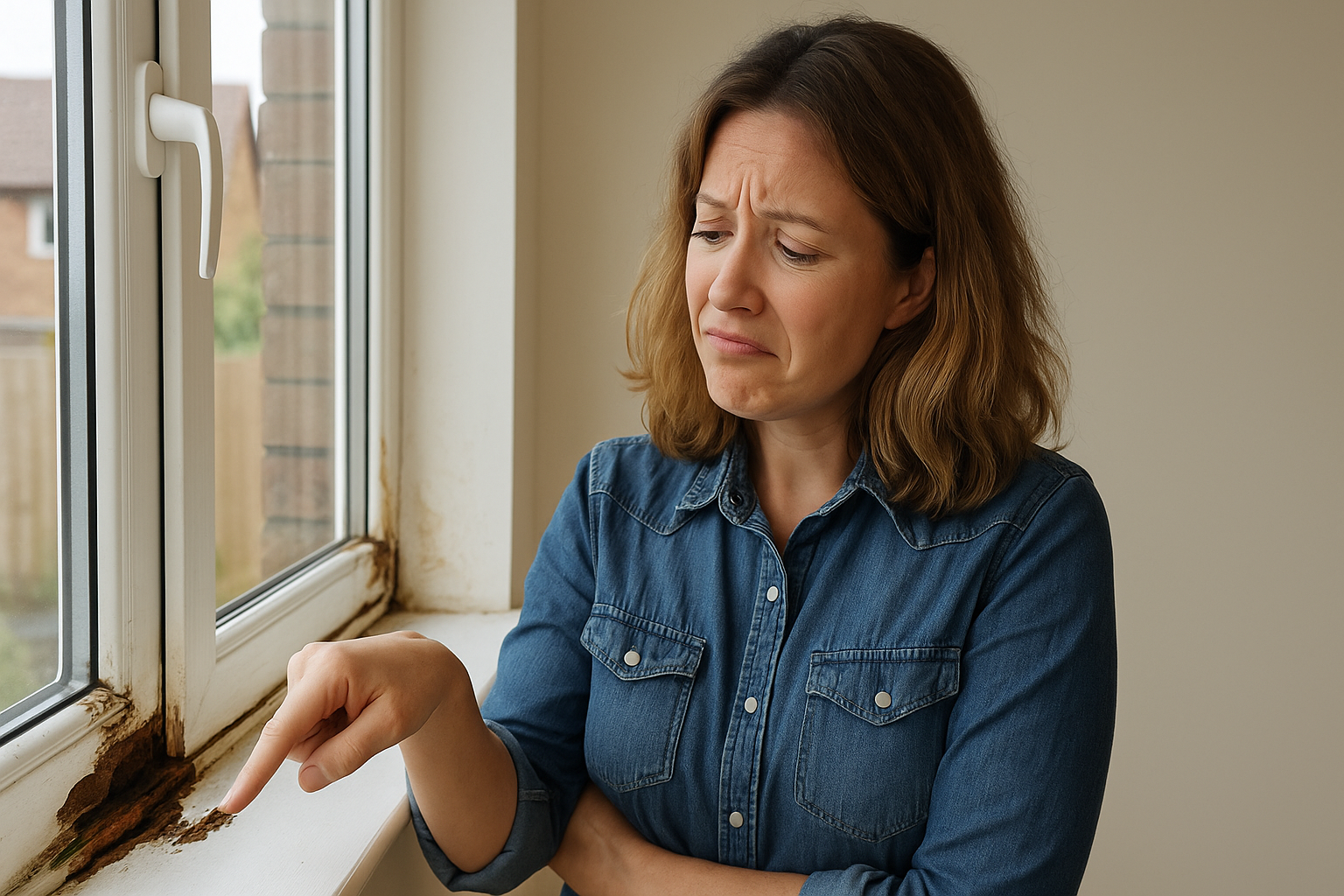
Want a quick DIY check before calling someone in? Here are a few tricks:
- Tap test: knock gently on exposed timber—rot often sounds hollow
- Smell test: dry rot in particular carries a clear musty scent
- Visual scan: look for discolouration, cracking, or anything fuzzy
- Touch test: soft spots, crumbling edges or peeling surfaces are big red flags
If you’re unsure, don’t leave it to chance. A professional can assess what you’re dealing with and offer solutions that are more likely to last. You can always contact us to arrange a no-obligation survey.
If you’re seeing signs of wood decay, it’s probably best not to wait. Even small patches can lead to big repair bills if ignored. Whether it’s dry, wet or soft rot, the right treatment can restore your timber and help you stay one step ahead of future issues.
