
Last Updated: November 22, 2026
Quick Summary
You can check cavity wall insulation quality without removing bricks by examining the brickwork pattern, measuring external wall thickness, looking for drill holes, booking a borescope inspection, and reading the EPC. A borescope camera shows the material, its condition, and any gaps. A proper inspection confirms whether the fill is dry, even, and full.
- Stretcher and header courses in the brickwork mark a cavity wall.
- An external wall thickness of around 250-300 mm usually means a cavity.
- Filled drill holes in mortar joints often show where insulation was injected.
- Cold spots on internal walls on a cold day suggest gaps in the fill.
- Check whether the original installation came with a guarantee.
Table of Contents
- Signs of Poor Cavity Wall Insulation
- Cavity Wall Insulation Inspection: How to Check Without Removing Bricks
- How to Tell If Cavity Wall Insulation Is Working
- Frequently Asked Questions
Signs of Poor Cavity Wall Insulation
Cold rooms, damp patches, and rising heating bills often point to failed or badly installed cavity fill. Cold rooms, damp patches, and rising heating bills are common warning signs of poor installation.
If several apply, the insulation may be wet, patchy, or missing. Our cavity wall extraction specialists can assess safe removal and explain your next steps.
Cavity Wall Insulation Inspection: How to Check Without Removing Bricks
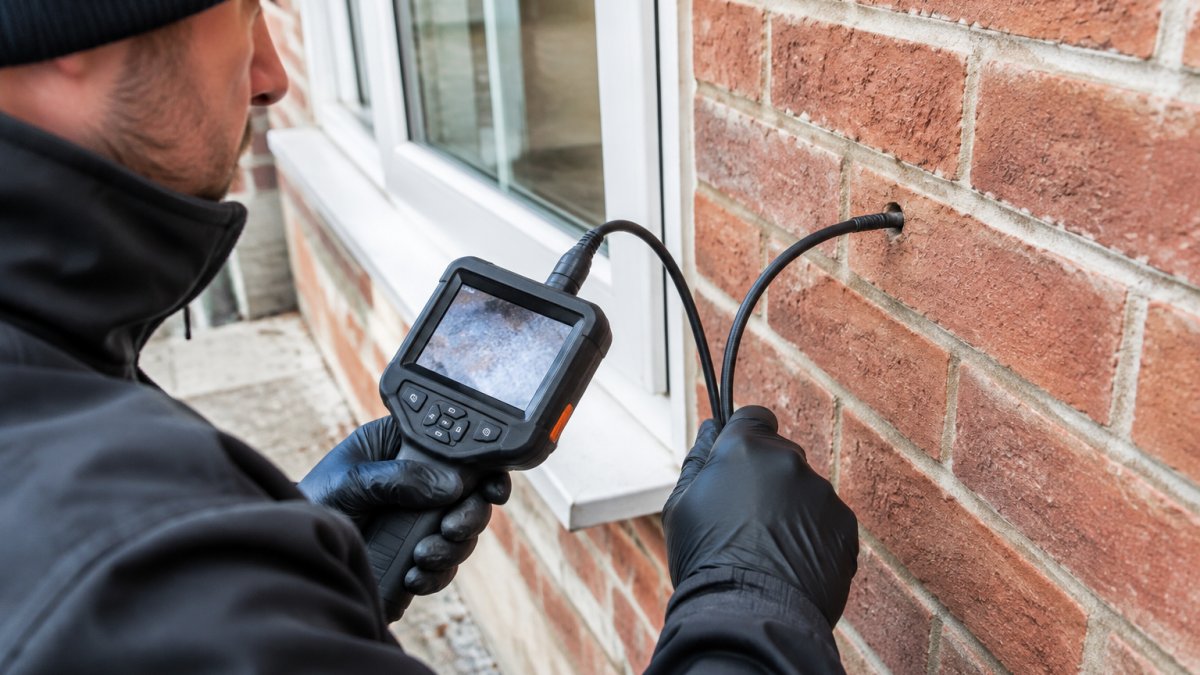
You can check cavity wall insulation quality without removing bricks: a borescope camera, a wall thickness measurement, and a look at the brickwork give you most of the answer, and the Energy Performance Certificate is a useful starting point.
- Check the brickwork pattern. Stretcher and header courses mark a cavity wall.
- Measure the external wall thickness. Around 250-300 mm usually means a cavity.
- Look for drill holes. Filled holes in the mortar joints often show where insulation was injected.
- Book a borescope inspection. A small camera through a drilled hole shows the material, its condition, and any gaps.
- Read the EPC. It records what insulation was installed and when.
A proper inspection tells you whether the fill is dry, even, and full. Our team can carry out a cavity wall insulation survey and confirm what is inside your walls, contact us to arrange a visit.
You can check cavity wall insulation quality without removing bricks by following these steps.
| Step | What to do | What it shows |
|---|---|---|
| 1 | Check the brickwork pattern | Stretcher and header courses mark a cavity wall |
| 2 | Measure the external wall thickness | Around 250-300 mm usually means a cavity |
| 3 | Look for drill holes | Filled holes in mortar joints show where insulation was injected |
| 4 | Book a borescope inspection | Shows material, condition, and any gaps |
| 5 | Read the EPC | Records what insulation was installed and when |
How to Tell If Cavity Wall Insulation Is Working
Cavity wall insulation is working when rooms feel warmer, walls stay dry, and bills settle. A guide to the savings cavity wall insulation can deliver gives you a benchmark.
- Feel the internal wall on a cold day. Cold spots suggest gaps in the fill.
- Look for damp patches or mould that keep coming back.
- Compare your energy use with the EPC rating.
- Ask whether the original installation came with a guarantee.
For checks, guarantees, or surveys, our frequently asked questions page covers the practical answers.
If your home feels colder than it should or damp keeps returning, the cause may sit inside your walls. Home Energy Save GB offers free damp and energy efficiency surveys, KIWA-accredited work, and over 40 years of experience assessing insulation and damp problems. We provide precise diagnostics and tailor-made solutions for older and modern properties alike. Get started with Home Energy Save GB and book a free survey to find out exactly what is going on inside your walls.
Frequently Asked Questions
How can I tell if my cavity wall insulation is working properly?
Compare rooms on external walls with internal walls: if external rooms feel noticeably colder, show cold spots or uneven wall temperatures, or gather damp patches, the insulation may not be performing. Check your energy performance certificate for the installed rating, look for draughts at skirting level, and note whether heating bills have crept up. A borescope inspection by a professional installer confirms whether the cavity is fully filled and the material is dry and intact.
Can I check cavity wall insulation without removing bricks?
Yes. A cavity wall insulation inspection can be done with a borescope camera inserted through a small drilled hole, usually in the mortar joint, which is later sealed. Measuring external wall thickness at a window reveal and checking the brickwork pattern also help confirm the property is suitable. A professional survey can help you understand the findings.
What should I do if my cavity wall insulation is faulty?
Gather your installer documentation, warranty and any EPC records first, then arrange a professional assessment to confirm the defect. Report suspected installation failures to the installer or warranty provider. A professional survey can help identify the cause of damp and cold before any work begins.

